Image Slider

Let's Talk Construction Order - The Willa Wrap Coat Sew Along

Tuesday, January 19, 2021


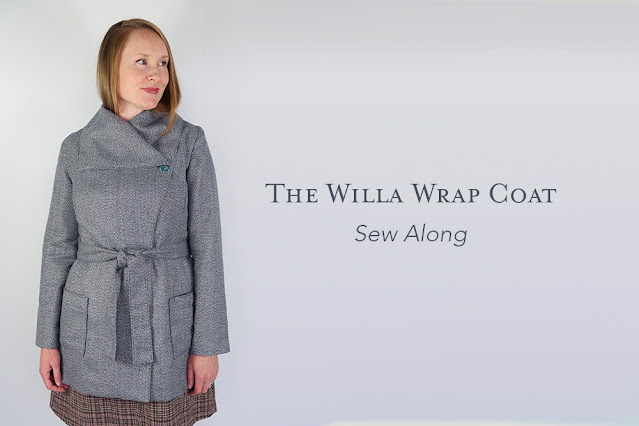
Today's Sew Along post is just a short one, and it's one that gives you permission to tackle the construction of the Willa Wrap Coat however you feel makes the most sense to you. You don't have to follow the order of construction in the instructions (or even in this Sew Along!).


Here's a secret... I may write and illustrate all of my instructions and decide the order each step should go in, but I actually rarely follow my own construction order. When I approach the writing and illustrating of any instructions for a new pattern, I tend to aim them at a complete novice, even though a pattern may be an intermediate or advanced pattern. I write each step in a logical order, building on the last step so that it's easy to visualise where you're going in the next without having to repeat steps  constantly. However,  this isn't always an efficient use of time - it may be logical, but it's not efficient.


When you're sewing up Willa, you're essentially making two coats - the outer coat and the lining coat - before the two are joined. This means that many of the steps for the outer coat are exactly the same for the lining, and for the sake of not repeating the same step twice in the written instructions, I will often say something like 'repeat for lining' throughout. 


For example - instead explaining and illustrating how to set in the sleeve for the outer and the lining, once we've done that step for the outer coat, I've written 'repeat for the lining', because it's exactly the same. This would assume that you're sewing both the outer coat and lining at the same time, which is completely fine if that's what makes sense for you, but personally, I find it most efficient to sew up the entire outer coat first and then the entire lining before joining. That way, I'm not needing to constantly switch up my needle and thread for each step - as these will often be different when sewing up a thick outer coat and then a thin lining (that is maybe in a different colour).


For this Sew Along, I'll be publishing each step in the order the instructions are written BUT, I won't actually be sewing my own coat in that order for the above reasons.


I hope this post gives you permission to tackle your coat making how ever you feel is easiest and most efficient for you. You don't have to follow the order of the instructions, I don't!


You can purchase your Willa Wrap Coat here and check out the full Sew Along schedule here.


xx

J

Useful Coat Sewing Tips - A Confidence Boosting Post

Monday, January 18, 2021


If you've ever thought about making your own coat and then talked yourself out of it because it seems too daunting, then this post is for you!


I would say the biggest obstacle to tackling coat sewing (and this is for any coat) is your mind set. So, keep these three things in mind as you make your way into this new, unknown, yet exciting world...


Mind Set:


Like most things that seem hard when you're new to sewing, making a coat is right up there as the ultimate 'hard' thing. It can seem like there are endless new techniques and a bunch of weird new lingo to learn (what even is a sleeve roll and what does it do?!). All of this will have you questionning whether you can do it and I'm here to tell you that you most certainly CAN tackle Willa, even if you're not an 'advanced' seamstress.


Honestly, the general construction is pretty straight forward. If you've sewn in a dart and set in a sleeve before, then there's not a whole lot of additional technical know how needed.


Yes, there are some additional prepping steps before you start sewing, there are a few little extra steps that will give your coat a professional finish (hello sleeve roll!) that you don't actually technically have to do, and there are a few tricky steps that you need to take your time with. But, I'll be holding your hand every step of the way during this Sew Along, with a mix of photographs, additional drawings and video tutorials.


Time:


You're making a coat not a simple t-shirt. Remember this and don't rush. It's a marathon (of fun!) not a sprint. You don't make a coat everyday, so revel in the process, do all of the little things that maybe take an extra 10minutes and fall in love with the sewing process, rather than the finished project.


And make a toile. No really, don't skip this step, you'll be so much more confident whether you have to make a few pattern changes or none.  If you end up not needing to make any adjustments, it might feel like you just wasted a whole bunch of time, but if you turn that around, I say you've not only practised some of the trickier steps ahead of using your good (possibly expensive fabric) BUT you've also made it easier to jump in and cut into your good fabric, because you know the end coat will fit.  If you end up needing to make adjustments, again, you'll be confident making a start in your good fabric, knowing that you'll end up with a garment that fits, and sometimes, it's starting the cutting that can be one of the hardest things.


Maybe it'll take you a week, a month, a year to complete, but if you take your time, you'll have a finished garment that you will love, wear and cherish for a lifetime. It's worth taking your time and paying attention to the details here. You'll also pick up so much useful sewing knowledge along the way that you'll be able to apply to all of your future sewing projects. 


Plus, how proud and confident will you be now that you've MADE A COAT. And it wasn't even that hard...


Materials:


One of the biggest hurdles for me when coat making (and boy did I make A LOT of coats during the making of this pattern) is the sheer amount of fabric you need. Depending on what you choose to use for your final coat, it can be heavy, long and thick, plus you have to cut out an additional lining (which is pretty much like cutting out and making another coat, and then you have to join them together...) as well as interfacing. And all of that fabric, when you add on pockets, belt/hang loops and a belt, can be HEAVY and bulky.


The part of coat construction I always tend to dread is when I get to the joining of the outer coat and lining. There is so much fabric to manoeuvre through the machine. But, I can do it and YOU can do it too. Approach coat making knowing (like with most other sewing projects) that there will be annoying parts. Take your time, take regular breaks, but most importantly, push through, it's so worth it.


Also, make sure you have everything before you start. Get your machine serviced - depending on what your outer coat fabric is, you'll be giving your machine a thorough work out. Clean your machine regularly throughout the construction process, your poor little feed dogs will probably get clogged quite quickly - as many outer coat fabrics and the way they are woven, mean all of those little fluffy threads will make your machine their new home in no time. I suggest having a quick clean of your feed dogs and bobbin case each time you sit down to sew (or after each sewing session, so you're ready to go next time).


And lastly, make sure you have a packet of appropriate needles for your chosen weight of fabric. Once you get to adding on pockets/belt loops etc, there are many layers to go through, so having heavy duty machine needles are essential.


For more in-depth info on fabrics and tools you'll need for your Willa Coat, check out the Fabric & Tools Sew Along post here.


If you're still not sure you can sew a coat, I encourage you to check back with the Sew Along regularly and follow the sewing process in it's entirety. I promise you'll come out wondering what all the fuss was about and ready to jump in.


You can purchase your Willa Wrap Coat pattern here and view the full Sew Along schedule here.


xx

J

2020, The Year that was...

Friday, January 1, 2021

JLH Instagram Top Nine for 2020


What a year 2020 has been.


I generally like to reflect on the good bits at this time of year, but it really has been a year of extremes. It's hard to focus on the positive without acknowledging all of the other turbulent things have come along with it. Like any thing in life, you can't have the good without the bad, and sometimes, it's the bad that makes the good in the first place.


We've had COVID-19, the unnecessary deaths of innocent Black lives & leadership debacles. We've made mistakes and we've (hopefully) learnt from those. Out of these huge events, we've learnt that we need to come together as a community to look after each other, we've learnt about our privilege and how to use this for good. We've got leadership coming in (and staying!) that will build on these things and bring people together, rather than divide. For me personally, 2021 feels hopeful, but without the events of 2020, to be honest, we probably would have been in exactly the same place we were on these issues at the start of the year. 2020 has created the momentum, and now it's important that we continue with the changes that we know are necessary for the good of everyone. 


JLH Paper Patterns


JLH Pattern's wise, it was a hard start, not knowing how world events would impact on my energy, time and of course, pattern sales. I opted not to turn any new patterns into the paper format this year, which was a hard decision because 2019 had been such a great year for paper, with the introduction of the format in late 2018.


I still haven't come to a conclusion about paper in 2021, but I'll spend some time pondering the future of JLH paper patterns over the next few months and will let you know how that goes once I've come to a decision.


The Willa Wrap Coat, available in JLH Curve sizes


Extended Sizes - JLH Curve


2020 did see my pattern offerings round themselves out a bit with the introduction of my first 'pants' (trousers?) pattern, The Bastion Culottes and my first coat pattern, The Willa Wrap Coat. I also introduced my new expanded size range  - JLH Curve - with The Dulcie Pinafore and Willa Wrap Coat currently available in sizes 6-34 in A to F cups.


Adding the new sizes was something I'd been meaning to do for a long time, and I'm sorry that they didn't happen sooner.  It is a lot of work, as they are essentially a new pattern all in themselves (based of an entirely different block with a new fit model etc) and then needing to source models to photograph samples on top of that (it's usually just me and I squeeze photoshoots in around naps!).  


It also took a lot of careful consideration to be able to implement the new sizes without raising prices or having to sell them separately. But now that I've got a process worked out, the aim is to continue this on into 2021. I'll be continuing building on the extended sizes by releasing some popular older styles over the year as well as all new release patterns being available in these sizes. 


The Dulcie Pinafore, available in the new JLH Curve sizes.


Work/Life Balance


In terms of work/life balance, 2020 has been HARD! It's still just me running this little business, along with a handful of other freelancers, and I've only had 1 full day a week to work (along with evenings and weekends) because I've essentially been at home full time with Rowan. This has been both a blessing and also some serious hard work. It's left me incredibly tired and drained, both mentally and physically. And while I'm super grateful to have been able to spend that time with her, gosh, it's not exactly ideal.


This year, Rowan starts a few regular Kindy mornings from March and I'm hoping that once she settles into the routine, I'll be able to feel, and be, much more focussed and able to spend more quality time on each aspect of life, rather than having to do all-of-the-things with half my mind on something else.


With that in mind, I've decided not to release any new patterns for the first few months of 2021, and instead spend that time on getting Rowan properly settled into Kindy and all of my 'JLH Patterns' and 'personal-life' ducks in a row. Hopefully, my first pattern (The Esme Top) will be released towards the end of March/start of April, but I'm giving myself some breathing space on that and not pushing myself to get it out just for the sake of it (it's all designed and nearly ready for testing though...). 


The Bastion Culottes


New Patterns and Plans for 2021


I currently have three brand new patterns designed and in the works, and several older styles that are getting the extended-sizes make over. But as I said, I'm trying not to put too much pressure on the beginning of 2021. I hope once the momentum starts though, it'll keep ambling along at a productive pace. 2021 does feel more energetic and like it will be far more balanced than 2020 was.


I'm also wanting to spend more time catching up on things I haven't had the time to do over the last 1.5 years I've been at home with Rowan. I have so many tutorials and pattern hacks in my head that I'm excited to share with you this year, so that you can get even more out of your JLH patterns.  


The first cab off the ranks is the Willa Wrap Coat Sew Along. It's my first proper sew along for a long time, and it's been fun jumping back in and going a little deeper with each step of the construction process. I hope you'll be sewing along with me come January 18!


Thank you!


If you've read this entire post, brava to you. Let's not wish 2020 good riddance though, let's take what we learnt and do better in 2021, for without 2020, we would not be where we are today, we would not know what we know today and we would not do what we need to do today, for a better tomorrow.


And last but not least, a huge thank you for all of the support during 2020, I wouldn't be here without you. Happy New Year Friends, let's get some more sewing done, shall we?


xx

J


JLH Holiday Hours!

Wednesday, December 23, 2020


The end of 2020 is nigh, and that means it's time to take a breath and a break.


I will be away from emails and the shop from today and will be back regularly answering emails from Monday 4th January (NZDT).


The shop is still open - all digital patterns will be emailed directly to you once you've checked out, and paper patterns will be processed and sent upon my return.


If you have anything urgent over that time, I will try to get to you ASAP, but I'll have no email access until the 30th December, so will be unable to help out until after that time. I thank you for your patience and understanding and I hope you are able to take a little break over this time to reflect, refocus and reenergise. And maybe plan a little sewing along...


See you next year,


xx

J

Fabric & Sewing Tools - The Willa Wrap Coat Sew Along

Tuesday, December 22, 2020


Welcome to the first official post in the Willa Wrap Coat Sew Along


Although the Sew Along doesn't officially start until January 18th, I wanted to pop this post up a bit earlier so that you could start thinking about the kind of fabrics you might want to use for your final coat. I say 'final' because of course, I recommend making a quick toile of your coat first. Which leads me too...


Fabric Options


Toile Fabric:


While you can use calico (muslin) to make a toile of your coat - as this is traditionally what is used when making toile's for other garments -  you do need to be careful about over fitting in a fabric like this.


Generally, your outer coat fabric is going to be much heavier/thicker than calico, and it can be easy to think your coat may be too big/bagging in places it shouldn't etc when in fact, once it's fully interfaced, constructed and lined, then put over the top of any garments you might be wearing underneath, you may find it just right. 


So, if you can, finding a cheaper fabric that is slightly heavier for your toile is recommended, but, realistically, you'll have lighter/cheaper fabric laying around that you'll probably want to use instead. So, just keep in mind that it's really important you don't over fit your toile in a fabric like that.


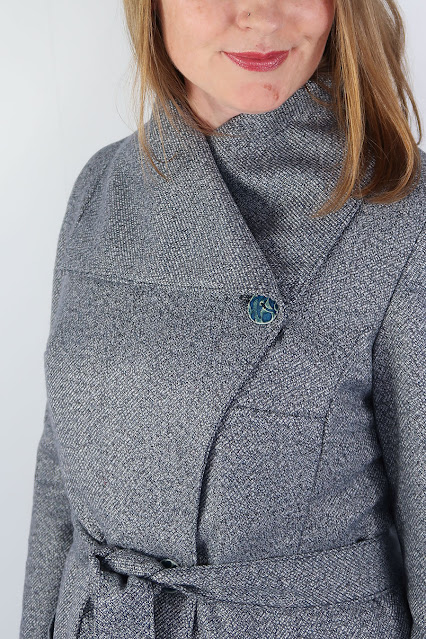
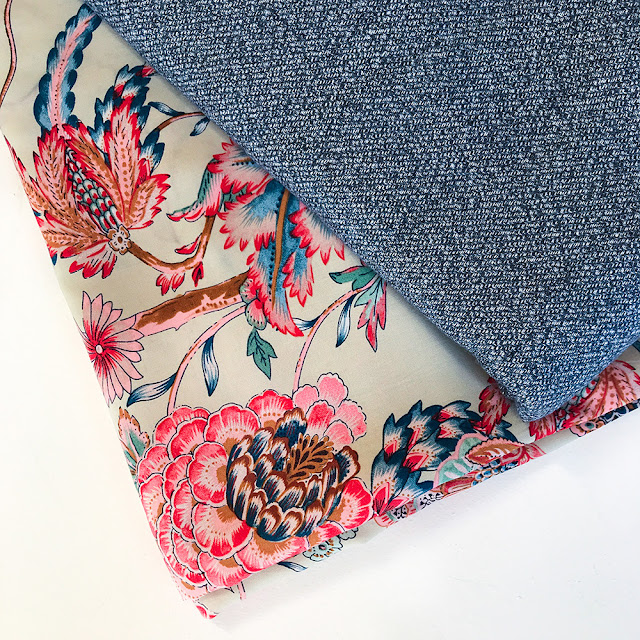
A close up of the woven marle-effect wool blend outer fabric and rayon lining used in my (Jen) Willa Wrap Coat Sample.


Main Outer Coat Fabric:


There are so many beautiful coat options out there! I love a traditional melton wool (which is essentially a felted wool, used in Kyla's Cream Willa Wrap Coat sample) as well as herringbone, tweed and boucle.


You're looking for a fabric that is mid-weight with drape and some body to keep that collar looking crisp, whether it's buttoned up in the funnel neck style or the collar is left wide open.


Opting for a wool blend will give your coat warmth and drape while also keeping it light and easy to construct.  The fabric I used for my sample (blue) has texture woven into it using strands of blue and white wool/polyester blend threads. It's silky to the touch and the weave pattern gives an interesting look to the fabric, along with a marle effect with the two colours intertwined.


Quilted fabrics would also be a great option and give your coat some beautiful texture - just watch out that the finished fabric isn't too thick/heavy. There are some beautiful quilted denims around, as well as velvets, linen and metallics.


And for a much lighter weight coat, you could try using a mammoth flannel, it's thicker than normal PJ flannel, giving you a super lightweight coat, while also still being snuggly warm and easy to wash and wear.  In this instance, you could also consider adding an additional layer between your outer and lining fabrics. I would suggest using any additional fabric as an interlining paired with your outer coat pattern pieces. You essentially cut your outer coat and interlining fabric together and treat each piece as one, keeping your lining separate.


And finally, you could also opt for a sweatshirt knit - these have a slight stretch to them and tend to be a bit lighter in weight than traditional coat fabrics. They are floppier in their structure, but if you use a good interfacing, you'll get the hold at the front you need for a crisp collar.


Here are a few links to some lovely fabrics from your favourite local haunts:


There are so many more lovely Willa appropriate fabrics available from other JLH Stockists as well, find your local options here.


Lining Fabric:


I opted to use rayon for all of my linings - it's relatively inexpensive (unlike silk), comes in a huge range of colours and prints and is still light-weight and silky. It also doesn't fray as easily as many polyester fabrics and also breathes much better. Viscose is also another great, pocket-friendly, option.


If budget is not a priority, you can opt to splash out on silk, just watch it around any steamy/hot irons, and make sure you finish all of the seams to keep it in tip-top shape for a coat that will last you many years. 


Polyester linings are inexpensive and a great option for if you're just wanting to see whether coat-making is your jam, without making it an expensive exercise. You can always re-line your coat later if it becomes a staple in your wardrobe and you're wanting something with a bit more breathability.


Kyla's cream flecked melton wool Willa Wrap Coat with a spotty honey coloured rayon lining.


Interfacing:


I recommend using a light- to mid-weight iron on interfacing.  The one I purchased also had a slight stretch to it (it's a knit interfacing) which is great if working with fabrics like wool coatings and sweat-shirting or a fabric that has texture woven into it (like boucle), as it gives body and structure without effecting the drape and movement of the fabric.  The shop I purchased from has since sold out of what I bought but it was similar to this.


If you're using something more stable like a quilted cotton or denim, then a plain interfacing is perfect here.


As a side note, in the instructions, the Centre Front Coat (pattern piece A) isn't interfaced around the collar/front because most of the time, the outer coat fabric that people will probably choose for a style like this means that adding additional thickness makes sewing hard (and isn't necessary). 


However, if you choose a lighter/floppier outer fabric (like mammoth flannel or sweatshirting) then interfacing the centre front coat at the front/collar is a good idea. It will provide the additional structure that your fabric can't and will give you a lovely collar that will hold it's shape during wear.  Use pattern piece F (Front Coat Facing) as a template, it doesn't fit exactly, but does the job!


While it can be tempting to interface your front facing when using a thicker/heavier fabric, some machines will struggle with the additional layer, especially if you're choosing to add buttonholes. So, keep that in mind, and perhaps do a test run on some scraps to see what your machine can handle.


Buttons/Snaps:


Buttons/belt loops/closures of any kind are completely optional for Willa. You can leave the coat open as is and it still looks beautiful. You can just use the belt to keep it closed and it works, but if you want extra hold at the waist and want to have the option of the cosy Funnel Neck style, then buttons or snaps are your friends here.


I recommend 2cm diametre buttons because they're an easy size to find and they tend to make a statement. You can opt for smaller or larger buttons here though. They can be shank buttons (copper jeans buttons would look amazing!) or flat round buttons, it's up to you!


If you don't want to insert buttonholes, you can use snap buttons. Just make sure that once your coat is fully constructed, that you can insert them into all of the layers you need too. That's 2 outer coat layers, one of which is interfaced (and possibly 2 if you're needing that additional structure) - so, I recommend testing this senario out first.


Lastly, if you don't want to add any buttons or snaps and prefer a cleaner front coat, you can opt for larger dress/skirt hooks that are sewn invisibly between the front wrap of the coat OR opt for a decorative shawl pin.


For this Sew Along, I'm using a beautiful forest green wool coating (80% wool with 20% polyester) and a rayon, with a slightly tropical vibe, as the lining. I haven't decided on buttons yet...


Useful Sewing Tools


Sewing Machine Needles: 


Make sure you pick up a packet of heavy duty machine needles. If your machine is struggling (skipping stitches etc) and isn't improving after re-threading your machine, try either changing your needle to a new sharp one OR go up a needle size.


Tailor's Ham: 


Tailor's hams are such useful pressing tools for all kinds of projects, not just coat sewing. If you don't have one, I have a free pattern for you to make your own here. Use your ham to gently press in curves from darts and sleeve heads in your set in sleeves. If you don't have a sleeve sausage, the ham can take it's place in many instances.


Press Cloths and Steamy Irons: 


To stop any shine getting onto your lovely coat fabric when pressing/steaming seams (and to protect the plate on your iron!), make sure you use a press cloth. It doesn't have to be fancy - I use an old cotton sheet - just make sure it's light weight and made of a natural fabric (cotton is perfect). 


And of course, an iron that gets nice and hot and provides lots of steam for setting seams will make your coat look professional as well as making it easier to construct.


Fancy Tools that are fun (but not necessary):


Walking Foot: 


I cannot find a walking foot that will fit my Janome (though I'm sure they must have one...) so this isn't essential BUT can make thick coat sewing much easier on your machine. Since your machine only has feed dogs at the bottom, sometimes this can make the top layer of fabric not feed through the machine evenly. A walking foot effectively works as a feed dog from the top, making the fabric feed through the machine evenly at both the top and bottom.


Wooden Clapper: 


A wooden clapper is a tailor's tool that is essentially a block of smooth, polished wood. Once you've steamed a seam, pop the clapper on top and press down until the fabric has cooled. It will give you a lovely flat and crisp seam allowance (or hem etc).  


Again, I don't have one and have happily constructed all of my Willa Coats up until now without one, BUT I have since put in a request to my wood-working husband to make me one. Maybe it'll be ready in time for the start of the Sew Along...


Sleeve Sausage: 


Like a Tailor's ham but long and slender, like, erm, a sausage. Pop it into your sleeve and press your long sleeve seam(s) open like a pro.


Hammer (not fancy, but definitely fun!): 


If you don't have a wooden clapper, and you have a particularly thick section of coat (I'm looking at you front corners!) you can try steaming your seam with an iron, then gently hammering it into submission. Trust me, it works!


If you have any questions about fabric or tools, just send me an email - I can't wait to see what fabric combinations you've come up with come January!


You can purchase your Willa Wrap Coat sewing pattern directly from my shop here.


xx

J

The Willa Wrap Coat Sew Along!

Thursday, December 17, 2020


If you're wanting to try your hand at sewing your own Willa Wrap Coat, but are feeling hesitant or overwhelmed at the thought of fitting, sewing and finishing a coat, then you've come to the right place.


This Sew Along holds your hand through all of the steps of sewing your Willa Wrap Coat. It includes detailed posts on fitting & common pattern adjustments, step by step instructions on constructing your coat (with detailed photos and/or video content), as well as additional ideas/suggestions on how you might want to adjust the pattern to suit your personal preferences.


Click the links below to go to each post.


Pattern Adjustment Week:


Pocket Week:


I hope the Sew Along fills you with the confidence you might need to tackle sewing a fully lined coat. I promise you can do it! Plus, you'll come out of it hopefully having learnt a few new techniques that you'll be able to take with you into your future sewing projects.


You can purchase your Willa Wrap Coat digital pattern here. Let's get sewing!!


xx

J

The Willa Wrap Coat - New Pattern Release!

Wednesday, December 2, 2020


Snuggle in and let Willa take you from chilly morning walks to glamorous evenings, all with a single fasten of a button...


The Willa Wrap Coat has been loooong time in the making and I'm beyond thrilled to finally be able to release it into the world today, in both Original and Curve sizing!


I started designing Willa during the winter I was pregnant with Rowan (mid-2018, YIKES!). I wasn't feeling well, it was cold and I just wanted to rug up in a blanket every time I had to head out the door.


The only thing was, I didn't want it to look like I was wearing a blanket, you know? I wanted a stylish blanket, one that kept me snuggly warm while still looking somewhat like I made a little effort (even though I didn't).


I like to think of Willa as a perfectly tailored blanket...


- - - - - - - - - - - - - - - - - - -


Pattern Details


Leave Willa tied or buttoned at the waist for the full dramatic effect of the wide collar design, perfect for an evening out, or button it at the top for a cosy funnel-neck styled collar to keep the cold at bay (a bit like an in-built scarf!).


Semi-fitted through the back and shoulders for a sleek silhouette when viewed from behind, Willa is deceptively easy to fit around the front due to the easy wrap-style, darted front princess seam and multiple bust cups (Willa comes with A to F cup sizes!).


Willa also sports patch pockets to carry all of your essentials and belt loops to keep your belt where is should be, perfectly cinched at the waist.


With enough ease to make light layering underneath easy and stress free, Willa is fully lined and is designed to fully cover and sit just below your bum (gotta keep that warm, huh?!).


All buttons/closures are optional - Willa looks equally lovely left completely open at the front.


Willa is all about style mixed with absolute comfort and warmth, with just a sprinkling of drama. It's a blanket in disguise, with just the right amount of tailoring to look effortlessly put together.


Keep the cold at bay with Willa, the dramatic yet modern coat of your dreams.


Skill Level


Willa is designed for advanced seamstresses or intermediate seamstresses looking to up skill.


But why not sew along...?


If you're feeling the urge to sew your first coat but are a little nervous, a full Sew Along - starting in January - will hold your hand through all of the steps of the process, if you're up for the challenge!


Sizing


The Willa Wrap Coat includes both the Original and Curve sizes, ranging from 6 to 34 with cups A to F. You can read about the new sizing here.


If you're worried about fitting a coat and choosing a size, I've also included a whole bunch of additional Finished Garment Measurements - from armscye and bicep circumference to shoulder width and more!


Simply compare these measurements to a coat you already like the fit of (or one you know you'd like to alter) and you'll be surprised at how much of the hard stuff is already done.


Multiple Bust Cups: A to F


Due to the relaxed nature of the wrap style, two cup sizes are integrated per front bodice - A+B and C+D Original Pattern, and C+D and E+F Curve Pattern. This gives a total of 4 front coat pattern pieces to choose from (rather than 8 separated cups).


If you fall into the smaller cup size, you may find there is a touch more fullness at the bust, but this should not effect the overall relaxed fit and feel of the coat.


Fabric Options


The Willa Wrap Coat is suitable for mid-weight woven fabrics with body and some drape.


Melton, boucle, herringbone and tweed, suitings, corduroy and light quilted fabrics would make a lovely coat.


Lining should be light-weight - cotton voile or lawn, rayon, polyester or silk linings work best to keep bulky seams to a minimum.


Meet the Models


In the Meet the Models section, you can find model information like their measurements, the size and block (Original or Curve) they are wearing as well as any pattern adjustments made to suit their individual bodies.


A huge thank you to Kyla (who also happens to be my neighbour - very handy for late-night fittings!) for modelling the new Curve 20C+D bodice.


You can find out all about us (and any particular quirks) on the listing page here.


Digital Release Only


You will receive both pattern size ranges delivered instantly to your inbox!


From there, you can choose my easy-to-assemble print-at-home file or you can send theA0 file to a print shop and have them print it for you.


The Layers Function is included in all pattern files, so you can turn on and off any number/combinations of sizes your heat desires.


There will be no paper patterns available for Willa at this stage.


Purchase Willa


You can purchase your copy of the Willa Wrap Coat here!


Make sure you tag me on Instagram or use the hashtags #JLHWillaWrapCoat or #JLHCurve so I can see and share your makes!


xx

J

Auto Post Signature

Auto Post  Signature